Learn chess.
Learn what happens
while you're thinking.
Most chess instruction stops at the board: openings, tactics, endgames. This one includes the part nobody teaches — what fear, frustration, and pressure do to a position you already understood a moment ago.
Chess is not only logic.
You already know some of this, even if no one has said it out loud in a lesson before.
You see the move. You even calculate it correctly. And you play something safer anyway, because the good move feels risky to commit to.
One blunder, and the rest of the game changes — not because the position demands it, but because you're now playing from somewhere defensive and rattled.
Losing a piece doesn't just cost material. It costs confidence, and confidence is doing more work in your decisions than you'd think.
A tournament loss can sit with you for days. That's not dramatic — it's what happens when you've been fully concentrated on something and it goes the wrong way.
Chess first. Emotions included.
This is chess instruction — real openings, real calculation, real endgame technique — taught by someone who also pays attention to what's happening in you while you play. It is not therapy, and it doesn't try to be. It's chess, taught by someone who understands that a player's mind is part of the position.
-
Board
Openings, tactics, strategy, endgames.
The actual curriculum — principles, patterns, and calculation, taught at the pace that fits the student.
-
Mind
Fear, frustration, pressure, recovery.
Named and worked with directly — how they show up on the board, and how to keep playing well through them.
-
Result
A player who thinks clearly under pressure.
Someone who can lose a piece, a game, or a tournament and still play their next move on its own merits.
Not therapy. Not a mindset seminar.
This is a chess lesson. The board is the focus, every time. Emotional awareness is a tool for playing better chess — not a separate curriculum, and not a substitute for professional mental health support when that's what's actually needed.
If a student is dealing with something beyond what a chess lesson can hold, that gets said plainly, and the right kind of help gets pointed to.
— the short version, stated honestly
Two starting points. One approach.
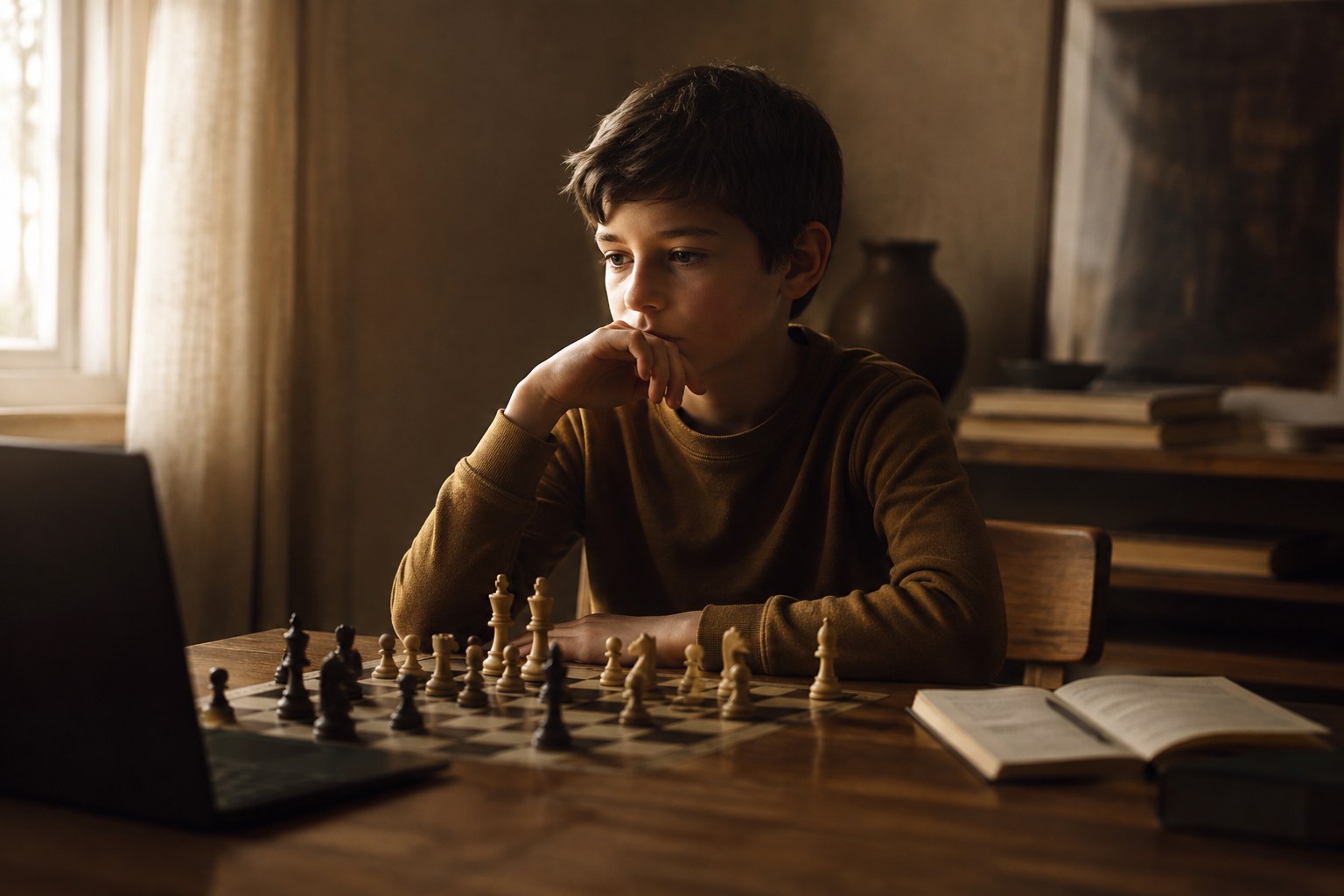
A place to learn chess and how to lose well.
Structured lessons in real chess — pieces, rules, patterns, and the beginnings of strategy — in an environment where a bad move or a lost game is treated as information, not a verdict on the child. Patience and concentration develop alongside the chess itself.
See lessons for children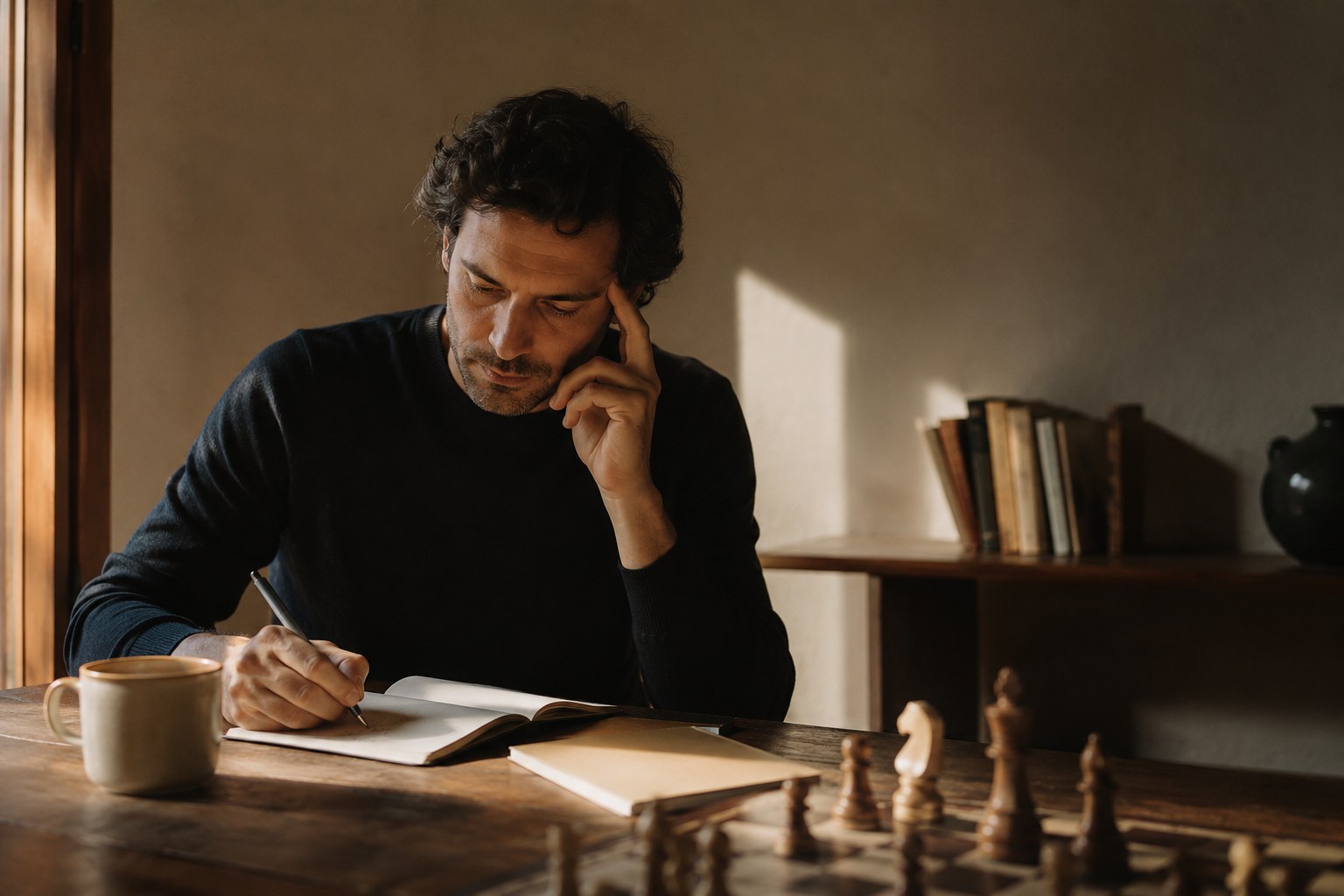
Structured improvement, with the mental game addressed directly.
Whether you're returning to chess or trying to break past a plateau, lessons cover the technical work — openings, calculation, endgames — while directly addressing the patterns that show up under pressure: overthinking, playing too cautiously, or losing composure after a mistake.
See lessons for adults
Andrea Romero
I teach chess to students from complete beginner through intermediate level, in individual lessons built around how each student actually thinks and plays — not a fixed curriculum applied the same way to everyone.
I learned chess at 8 years old as a very shy kid, and found in the board a way to express myself without needing many words. I competed for Venezuela, ranking among the top three junior players in the country — until a decisive loss, poorly supported emotionally, kept me away from the game for over a decade. I came back to chess as a teacher, this time with a clear mission: to teach not just how to move pieces, but how to hold frustration, mistakes, and pressure with resilience. Today I have more than 8 years of experience teaching chess to children, teens, and adults.
- Former regional junior champion of Venezuela (national top 3)
- 8+ years teaching chess to children, teens, and adults
Chess instruction, structured around outcomes.
Chess for beginners
Rules, piece movement, basic tactics, and the habits of a player who's just starting to see the board clearly.
Improvement & intermediate training
Openings with real understanding behind them, tactical pattern recognition, and a structured plan to move past a plateau.
Children's chess lessons
Age-appropriate pacing, real chess content, and a calm approach to mistakes that builds real confidence.
Game analysis
A close, honest look at your own games — what happened on the board, and what happened in your decision-making.
Tournament preparation
Practical preparation for competitive play, including how to manage pressure, time, and recovery between rounds.
Ongoing 1:1 coaching
A regular lesson slot built around a long-term development plan, revisited and adjusted as you improve.
Writing on chess, thinking, and the moments in between.
Real lessons. Real progress.
"Andrea is not only a high level chess teacher with a wealth of expertise, she also pushes me to do my best. She does this with kindness and helps me understand how to regulate my emotions as well — if the chess problem is really difficult and I am getting frustrated, she helps me process that and transform it into something positive."
"Andrea is really patient with my kid, but also really observant with what my child is missing or showing signs of understanding early. She balances guidance with letting my kid take the time needed to figure things out. They are progressing really quickly as a result."
"Andrea is the tutor I selected for my 6 & 8 year old daughters. I was blown away not only by her patience and warmth, but how she maintained their engagement through her methodical lesson. Andrea speaks clear English and is easy to understand for my girls."
"Andrea is a strong player who is able to thoroughly explain concepts and strategies. I've played for around 10 years and she created an extremely suitable plan that challenges me and helps improve my game. Very patient and an excellent communicator."
"Andrea helped me to see the game from different perspectives while keeping it fun and challenging. She also gave me ideas on how I can improve on my own, which I really appreciated. I would highly recommend her for any player looking to up their game."
"Andrea taught me how to visualize the next moves and ask 'why', 'what if' — I really love this style of teaching."
"Andrea did a great job with my nine-year-old. She was patient, engaging, and asked great questions to get my daughter thinking!"
"Andrea is an excellent teacher who in just our introductory lesson already taught me a lot about the game of chess. She is very friendly and professional, speaks fluent English, and I am looking forward to many lessons with her."
Start with one lesson. See how it feels.
No packages to commit to before you've met me. Just a first lesson to see whether this approach is the right fit for how you think and play.